interview with son lux
Searching for Humanity Despite Everything
By Jota
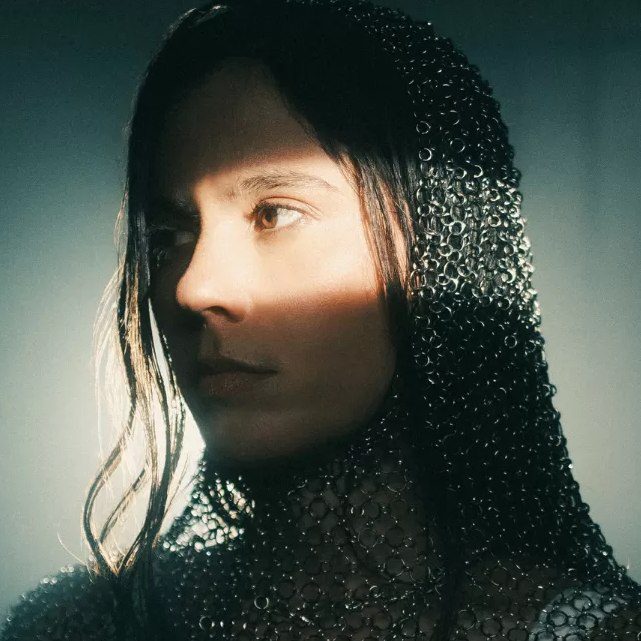
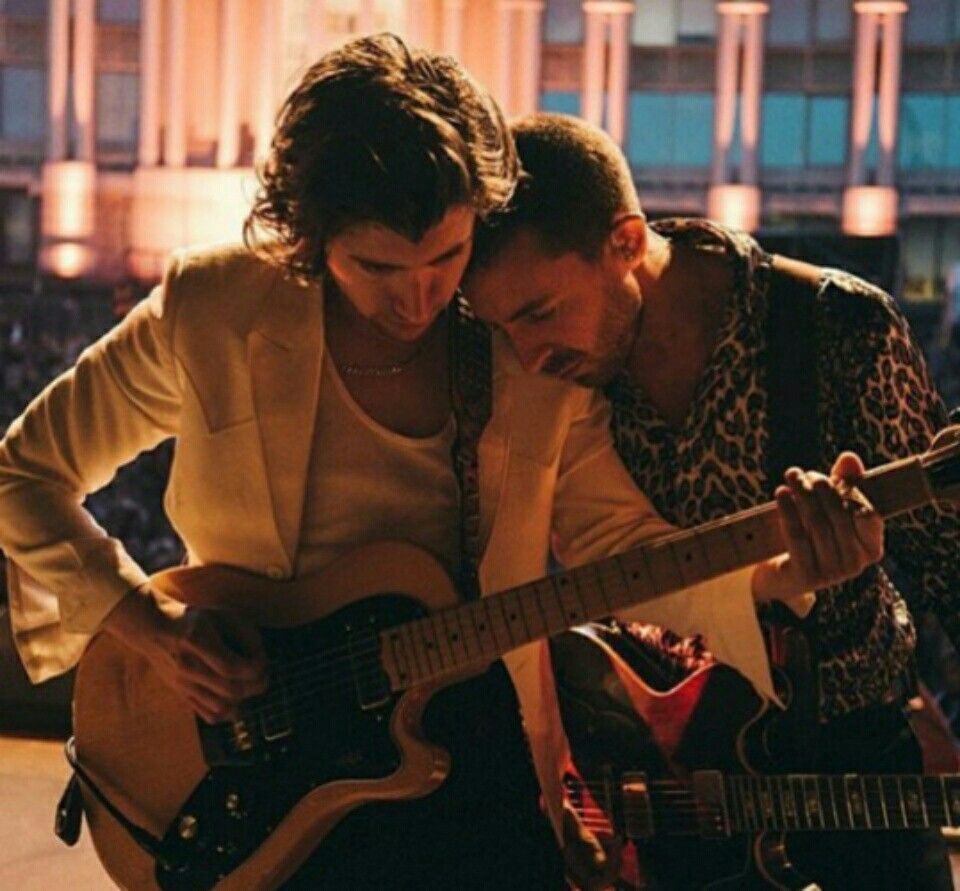
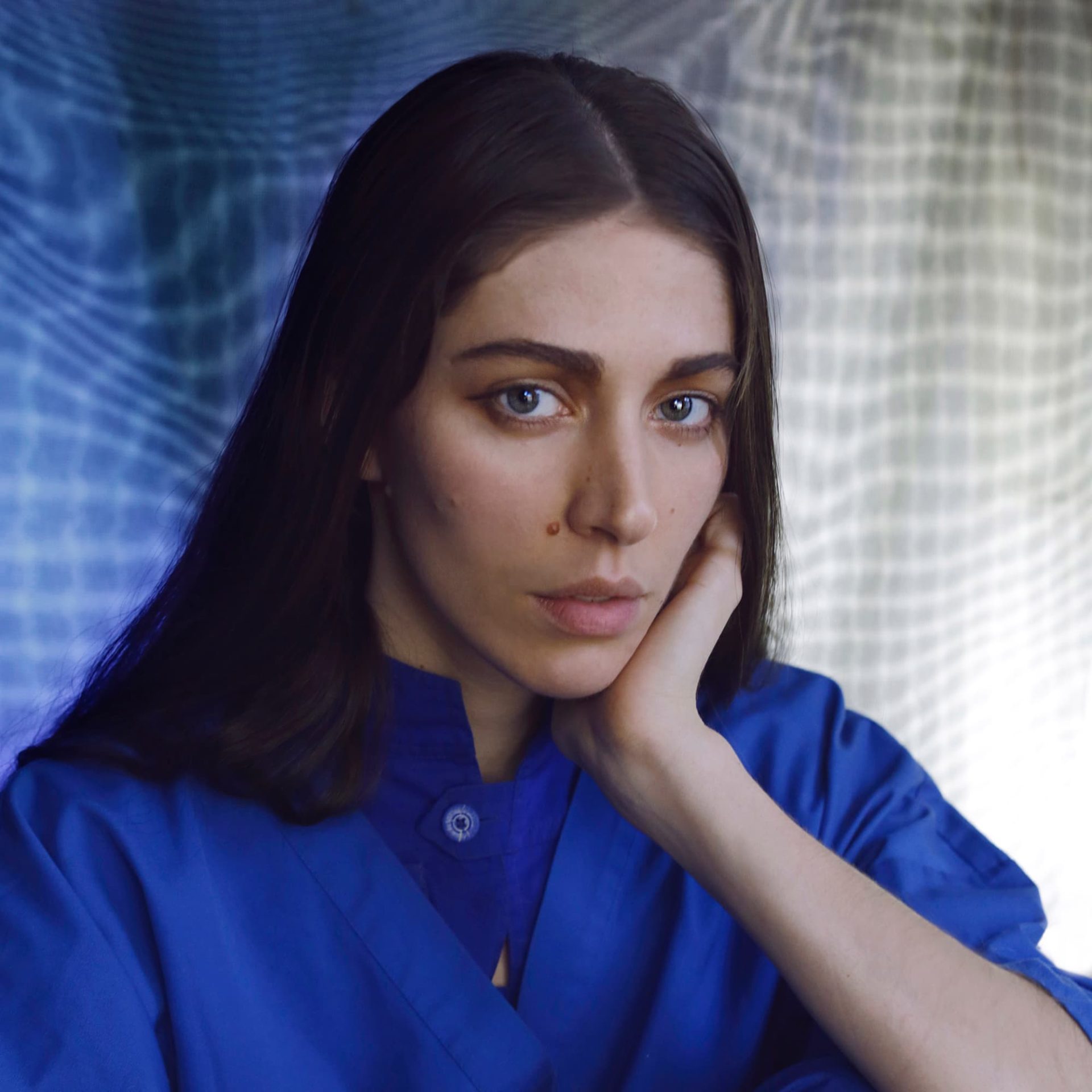
Just a few months ahead of the release of their new album, «Out Into», due out on September 18, we had the opportunity to sit down with Ryan Lott, Rafiq Bhatia, and Ian Chang, the members of experimental indie rock trio Son Lux.
Throughout the interview, the musicians reflected on their relationship with composition, their perspective on the current state of the world, and their views on the growing presence of artificial intelligence. They also shared insights into the creative process behind «Out Into» and offered a glimpse of the ideas and projects that will shape this new chapter for the band.
Read on to discover everything they had to tell us!
itsa: You are a gender-bending band, and your sound goes from the most beautiful and ethereal to really dark and even mechanical. How do you create this incredibly wide range of sounds without losing your identity?
Rafiq: Well, we’re all the same… you know? We’re… one person can have so much inside of them. We’re just trying to make music that feels human, I think. And it feels like it has. It approaches the number of facets that we all have individually and collectively, and…
Ryan: We all peaked at a lot of different kinds of music, and we just have continual fascination with what other people have done across a wide spectrum of music, and can’t help but try and incorporate some of it. Sometimes it’s intentional, but I think also you are what you eat.
Ian: Yeah, totally, all three of us are people who like… we are not musicians who necessarily are like… because every artist, every musician, every composer, like Ryan says, you are what you eat and you know, there is people who love Motown, so they make music that sounds like Motown, or people who love top 40 pop music, so they make music that sounds like that, and we have a pretty wide range of influences, but at the same time we’re very specific about what we like from each type of thing or… I guess to answer your part of how do we keep an identity, I’ll say it’s necessarily super… I mean it is intentional in a way, but also just kind of happens, because that’s who we are and how it comes up, and also doesn’t hurt, and I can say this because I’m not the singer of the band, but Ryan has a very unique voice I’ll say that also helps, but just in like terms of the types of noises, the types of harmonies, the types of rhythms we like, it is just specific things that we come across the three of us in different ways, and it just naturally comes up that way.
itsa: That is really cool, music as life itself that is mutating. What is the main idea of «Out Into»? Like, what did you guys build it around?
Ryan: Well, thematically, as the songs were coming together, I started to feel like the main idea was emerging, it was emerging without me trying, I should say. I guess you could summarize it as an investigation into the process of finding yourself and losing yourself at the same time, and when we make music we often find the song at the end of the life, of the process of any piece of music, and it’s because we often start with improvisation, and we did work in this record very slowly but in concentrated bursts all together, and our ideas came immediately through improvisation together in the same room, and then those ideas sat around for a long time. And, because we were doing a bunch of other things: scoring movies, producing our own solo music, and so the songs had a lot of time to kind of sit and gestate, and when it finally came time for them to reveal themselves as songs, and as we started to pull them together into a collection that would make the album. That’s really the process, that’s the part of the process where the songwriting comes in, where the lyrics began to emerge, and maybe it’s because that process happened quickly that the common theme that emerged across the record is about identity, I’m not really sure. A lot of times, I feel like when we make music, we’re just absorbing a process more than creating one. But I do feel like it is something that makes this record unique as compared to other Son Lux records, there feels to me like an overarching thematic, there’s a commonality across the songs thematically.
ITSA: I see, and how is the new album different from your previous work soundwise?
Ian: Soundwise, I think there’s… there’s a directness to a lot of the new songs, and I find that, listening back to some of our older work, I’m very proud of it, and it’s clear how much we put into it, you know? I listen back, and I’m like wow, like there’s a lot of cool ideas happening and stuff, but sometimes it can feel a little restless, in terms of the music we used to make. There’s a lot of sharp turns and… not always, but a lot of the time, just a lot of ideas, and it demands a lot of active attention from the listener in a way, I love that about that. And one way in which this album is a bit different is that there’s still a lot of detail, there’s a lot of texture and stuff like that, but we’re allowing things to sit more in a space, in a groove, in a feeling, and letting that just be. And also in some ways this album, there’s quite a few higher energy songs, I feel like for the first time we made an album that you can maybe put on in the background of a party, and it could work, you know?
Itsa: Wow… that sounds very fun.
Ryan: Well, depending on the party.
Ian: Depending on the party. We didn’t make like an EDM record, but it’s like our own version of higher energy, good feeling album in a way, there’s still a lot of emotion and stuff like that in it, and still sounds like Son Lux for sure, but it has more of that kind of… You could put it on and like have a bunch of people over, and it feels like a good time, you know?
itsa: It sounds really exciting! I have read that this album will have more political lyrics in it, with Trump in your country and well… Kast in mine, both far-right politicians, we’re living in a real dystopia right now… how do politics affect your creative process?
Ryan: That’s a great question. Personally, I have to be really careful, you know? There’s an incredible toxicity that can take over your heart and your brain just by confronting realities. But you also can’t deny reality and just escape it, and I think we have a responsibility to live in the world that we have made, and we have a responsibility to try and make it better. For me, as the lyricist, I have always tried to make songs that welcome interpretations, that welcome a person’s own experiences into the song so that the narrative can take shape in a personal way, there’s not… It doesn’t feel like a closed book, but more of an open book with some places where you can write your own stories. I’ve tried to make songs that way, and I think it has historically meant… It’s been hard to be specific with respect to some of my strong convictions, and my political convictions are among those. Absolutely fuck Trump, but i can’t… but I also don’t… it’s such a fine line for me and it’s one that I’m very honestly trying to investigate and trying to figure out, cause I don’t have a solution, but one of the things I do want to do is I want to speak to the things that matter to me in my lyrics, but I also don’t want to do it in a way that introduces the same kind of toxicity that can take over my life personally by singing about things that are toxic to me and my life.
And so, it’s a struggle for me personally, I don’t really know how to deal with it, but on this record i feel like in particular the song «No God like a King» is direct, that phrase and the lyrics, they’re directly inspired by christian nationalism, white nationalism that has taken over much of the culture of, not only politics but just our culture, our social culture in this country, and of course elsewhere. And as someone who grew up in a family of faith, Christian faith, I’ve seen a metamorphosis of… a terrible metamorphosis of American Christianity over the course of my life, and it’s something that I think about all day long every day, and that song, its lyrics emerged from that inspiration. And also, on the other hand, something that also is inspiring to me that is political, but it inspires maybe a more encouraging message lyrically, the song «Endlessly» is very much to me a kind of encouragement to… It’s a reaction to transphobia and homophobia, and it is very much an encouragement, for me personally, you know? a proclamation and an encouragement for those, for all of us to be ourselves, to be exactly who we are, and we need that encouragement a lot of times because, you know, a lot of times is very risky to be yourself, and I, as someone who is a cis, white male, I don’t experience the kind of risks that other people do just by being myself, and I recognize that’s a place of privilege, and so with humility, hopefully, I am singing a song that encourages everyone to be exactly who they are, but I come at it from a perspective that I hope to be someone who gives this support that is needed to those who are taking on a risk just in pursue to being themselves, earnestly and uniquely.
itsa: That ‘s great!
Ryan: I guess you can say, unfortunately, just “be yourself” in this political climate is political, it shouldn’t be, but…
Itsa: Sí, los tiempos en los que vivimos… Y sobre eso: ¿Cuál es su opinión de la IA y su uso en el arte específicamente?
Ian: You know, if I had the choice… if I had the power to make generative AI something that never existed, I would press that button immediately.
Ryan: Immediately.
Ian: Is something we’re all thinking about all the time, it’s something I haven’t really tried yet, and I don’t really feel interested in. I think well, in art specifically, AI is a complex and nuanced topic overall. There’s negatives, there’s possible positives and things, but in terms of the generative art side of things, and I think that’s an important distinction, because there are technological tools that are technically AI, but maybe they’re using discrete data sets, you know, either you create yourself, things you use with permission first of all, that can be ok, but generative art that’s been spit out by a machine that’s taking in data that they didn’t have permission to use, and of human history, I think it feels like an assault on the human spirit, and it feels like something that… in general it doesn’t feel like something that people have really asked for, specially artists. It feels like it’s driven, the motives that are driving behind it have more to do with profit for big companies. It’s really a shame, and I really wish it didn’t exist, I really wish I didn’t feel like I have to think about it so much, I wish I didn’t have to, probably in the future, navigate it in our work and in the way we make our living. And you know, I recognize people talking about it like “Yo, this is just another tool.” It’s like… it’s more than just another tool, but I don’t know, I’m not gonna keep going on it, but it’s safe to say I would delete it from this world if I could.
itsa: Yeah, we’re on the same page on that. You have worked on the soundtrack of several movies. I really love «The Disappearance of Eleanor Rigby», «Everything, Everywhere, All at Once», and recently «Thunderbolts». All those have made me cry like… multiple times. For you, how is the experience of making music for a movie different from making an album?
Ryan: When you’re scoring a film, you’re a filmmaker, and you are creating an aspect of a story, of a broader story. And it’s an incredible privilege to be able to be a musical part of a film, of filmmaking. It’s such an amazing thing to be part of the history of filmmaking now, with the projects we’ve been able to be a part of, very lucky to be a part of. What I really like about making film music is that I always have inspiration coming at me from the efforts of many different creative people, whether they’re costume design, production design, the director, the screenwriter, the DP, how everything looks, the feeling, the performances, of course, of the actors, there’s so much inspiration coming at me from my fellow collaborators in telling this story, and I’m always just the kind of musician who relishes outside, in influence and sparks of energy coming at me that I can respond to, so that’s a really really fun part of making film music. Sometimes when you’re making a record, especially if you’re working by yourself, you can feel a little bit alone, and not in a good way, you’re kind of alone with your own tools, and you’re at the limits of what you can do, and being part of a bigger family making a film is really exciting… That said, you’re making music with your eyes open, and when you’re making a record, you’re making music with your eyes closed, and those are different things. It’s like going to a restaurant versus having a home-cooked meal, they’re both beautiful things, I want them both.
itsa: What is maybe a movie that you would have loved to make music for? You can tell me one each.
Ian: Akira! yeah!, but also the score of that film is one of my favorites.
Rafiq: yeah, that’s the… I don’t know if this question is answerable, because all the best films don’t need anything from us, you know.
Ian: I’m putting myself in the hypothetical of “this movie didn’t exist yet”
Ryan: yeah, and also I don’t wanna throw shade on like… cause there’s definitely been movies that I’ve loved, but I thought the score wasn’t that good. I don’t really wanna publicly throw shade at them. I mean, how about a movie whose score inspired us?
itsa: Yeah.
Ryan: That’d be cool. «The Shining» for me, when I was a kid, when I… not really like young kid, but when I first experienced «The Shining», the way the music operates in that film, and also the fact that is not original score, it’s existing music that found an extremely amazing new feeling in the context of story, that was a very influential concept for me, to feel how music that I already knew at the time, very well, felt so different in the context of a story, and it’s something I continually love about the relationship between music and picture.
Rafiq: That was a big one for me too when I saw it. I’m gonna say the film «Memoria» by the Thai director Apichatpong Weerasethakul, was a recent big inspiration sonically, and there’s no score in that movie, but just the way that environmental sound functions in the film is just better than most scores. And also just, without giving anything away cause I think people should absolutely see that film if they can, there’s a way in which it builds intensity by getting slower and quieter that I’ll never be able to forget, and it just, it’s one of the things that turn a lot of my assumptions on their head.
itsa: I haven’t watched that one, I’ll put it on my list.
Rafiq: Good one.
itsa: Maybe I have time for one more question. Correct me if I’m wrong, but… Ryan, you have been making music as Son Lux since 2008, and you guys have been a band since 2015…
Ryan: 2014. And really kind of a little bit in 2013, because the record «Lanterns» from 2013, Rafiq does play on that, he plays on «Easy», and that was the first time as Son Lux working together he and I, and he was the first person I turned to when I wanted, when I needed to figure out how I was going to perform live as Son Lux, and Rafiq knew Ian. So basically, in 2014 we started playing as a trio for the first time in January. That year, I think we played like 130 shows or something crazy. We played a lot, and so 2014 for sure. Our first record as a band, we released in 2015.
itsa Yeah. More than 10 years later now. How have the dynamics of the band shifted and mutated from those early days? How have you been adjusting to those changes?
Rafiq: We’ve grown up together.
Ian: Yeah, a lot of life has been lived. These guys are my brothers, we’re family, and it’s a beautiful thing that one of the things in life that I’m most grateful for is this relationship right here, with these guys. And we continue to make music together in so many different ways, and I’ve learnt so much about life, not just music. The dynamics are good.
Ryan: I don’t think any of us could have anticipated that this project would be like a container that would hold so many different kinds of pursuits, and I’m very happy to say that it has. But yeah, I just feel lucky.
itsa: Are you planning to visit South America any time soon? Maybe as part of the «Out Into» tour?
Ian: There are efforts being made, but nothing we can say yet. We wanted to and want to come down, so we hope to share some good news soon.
itsa: That’s great, I’m gonna start saving money from this day on.